You finished a cage session, someone yelled out a bat speed number, and you have no idea if it was real or just a guess. You do not have a launch monitor, a partner with a radar gun, or a field open at 9pm. You just want to know how to measure bat speed at home on your own bat, tonight, and actually trust the number. Here is the sensor-first workflow that does it, the three methods ranked by how repeatable they are, the benchmarks for your level, and exactly what to do with your number once you have it.
Quick Answer
The most accurate and repeatable way to measure bat speed at home is a knob-mounted Blast Baseball sensor. It attaches to the knob of your game bat, measures barrel speed at the sweet spot on every swing, and syncs to the Blast app in real time. No launch monitor, no field, and no partner required. Air Swings let you record a valid swing indoors with no ball at all.
The 3 Ways to Measure Bat Speed at Home
Not every bat speed number comes from the same place, and mixing sources is how hitters end up confused. Here are the three methods you can actually run at home, ranked by how repeatable they are.
A. Knob-Mounted Bat Sensor (Recommended)
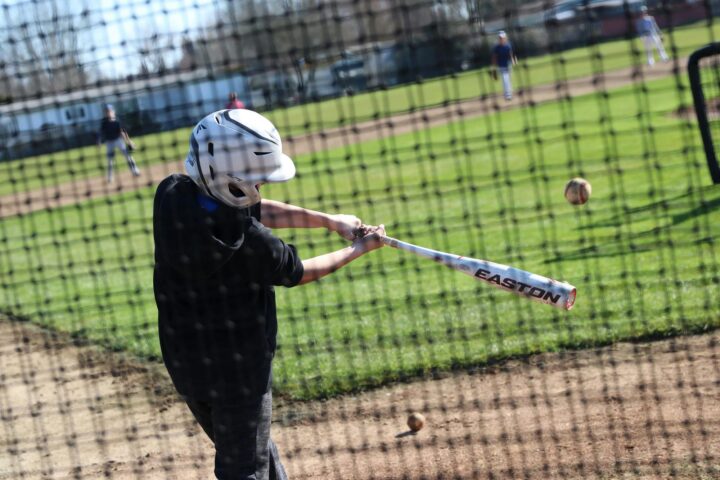
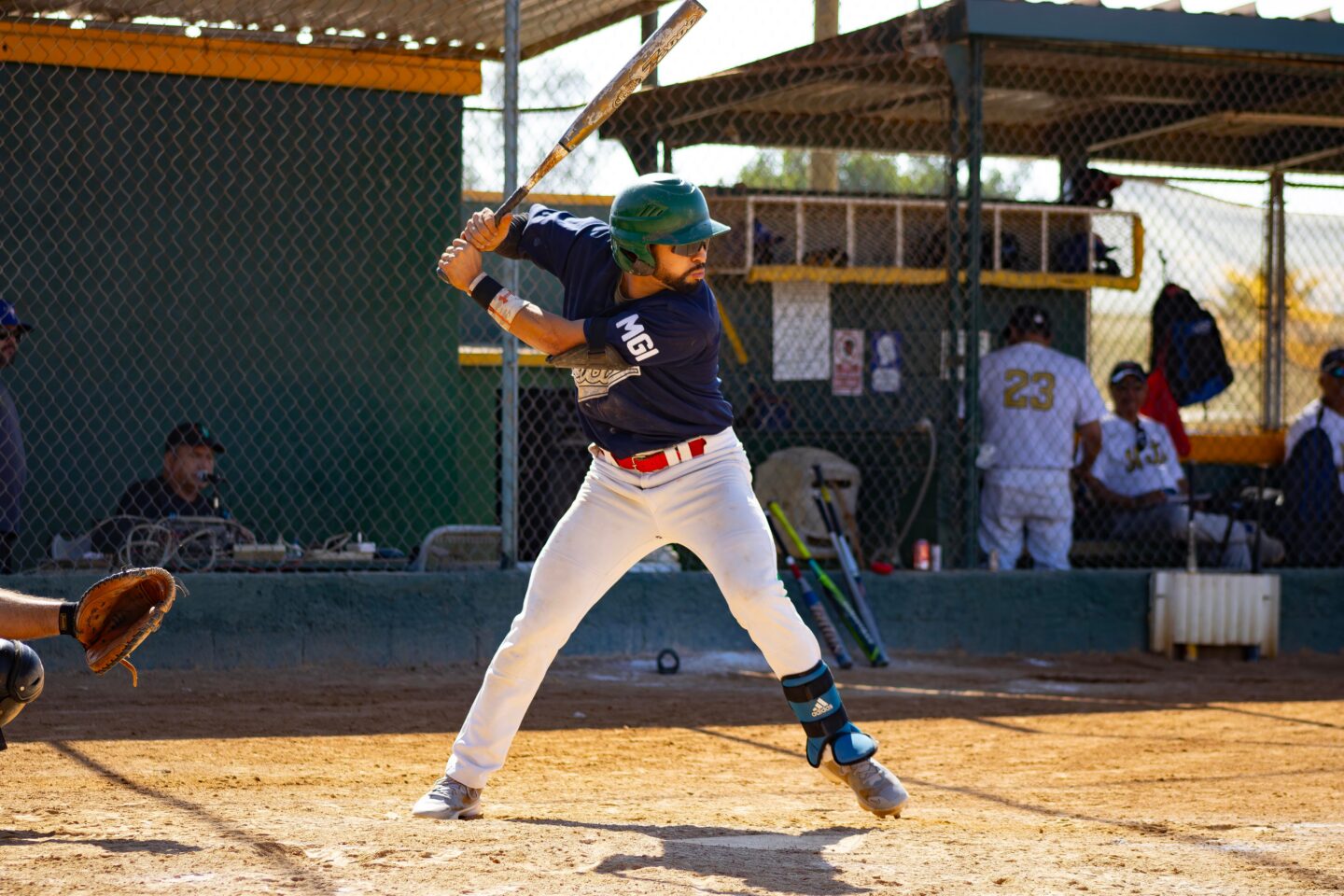
A Blast Baseball sensor mounts to the knob of your game bat and captures bat speed on every swing, whether you are on a tee, taking front toss, or hitting in the cage. Because it calculates the barrel’s speed through the hitting zone using the sensor data and your bat’s profile, you get the sweet-spot speed that actually reflects your power, not the tip speed a radar might catch.
A peer-reviewed 2022 study in the journal Sports found consumer bat sensors correlated well with lab-grade motion capture for swing speed specifically (ICC = 0.78). Worth knowing before you lean on every number the app gives you: the same study found meaningfully lower accuracy for swing angle (ICC = 0.58, which the researchers themselves flagged as low), and accuracy for both measures tended to drop off at higher swing speeds. Trust your bat speed trend more than a single attack-angle reading, especially if you swing hard.
Air Swings let you log a real swing with no ball, so you can measure in your garage. This is the one method that gives you a repeatable number on every rep.
B. Swing-Speed Radar
A handheld Doppler swing-speed radar reads the bat as it passes through the beam. It works, but positioning decides everything. Point it wrong and your number swings 5 to 10 mph. Radar also tends to read the tip or cap rather than the sweet spot, so the number does not always match sensor or Statcast figures. Use it as a rough check, not your training baseline.
C. DIY Video or Stopwatch Math
No budget at all? Film your swing from overhead against paper marked in one-inch lines and count how far the barrel travels per frame, or have a partner time a line drive over a measured distance and back into exit velocity. Both work directionally. Both are slow, fiddly, and the least precise of the three. Treat them as a fallback, not a system.
Takeaway: If you want a number you can trust on every swing, start with the knob-mounted sensor.
Tools and Methods: How to Set Up Each One
Here is the setup checklist for each of the three methods so you can start tonight.
- Blast sensor. Twist the Gen 3 sensor onto the knob of your game bat, open the Blast Baseball app, pair over Bluetooth, and take a swing. Bat speed, attack angle, and on-plane efficiency post instantly. Turn on Air Swings to train with no ball indoors.
- Swing-speed radar. Set the unit at barrel height, roughly even with your contact point, and swing across the beam the same way every time. Take 10 swings and average them so one bad read does not skew the number.
- DIY video or stopwatch. Mount a phone overhead, lay down inch-marked paper, film at the highest frame rate your phone allows, and measure barrel travel per frame. For the stopwatch method, mark 60 feet, time a line drive, and multiply distance over time by 0.682.
Takeaway: Pick one method and run it the same way every session so your numbers are comparable.
What’s a Good Bat Speed? Benchmarks by Level
Once you can measure bat speed at home, you need context. These practice-swing ranges come straight from Blast Motion’s 400M+ swing database, captured on the Blast Baseball sensor in tee and toss settings.
- Middle School (13–14): 46–62 mph
- HS JV (15–16): 55–65 mph
- HS Varsity (17–18): 60–70 mph
- College: 65–75 mph
- Pro / MLB: 66–78 mph
One honest caveat: Blast sensor data in practice runs slightly higher than in-game Statcast reads, which put the MLB average around 71.5 mph. So do not obsess over how your garage number stacks against MLB TV graphics. Track your own trend across retests instead. A consistent 64 mph that climbs to 67 over a season tells you far more than a single peak swing ever will.
Takeaway: Find your level, then chase your own next number, not someone else’s highlight.
Ready to get your real number? Click here to shop Blast Baseball.
What to Do With Your Number
A bat speed number is a starting line, not a finish line. Speed without swing quality just means faster misses. Here is how to turn the measurement into improvement.
- Pair speed with attack angle. Aim for an attack angle of 6 to 14° for most hitters so your barrel matches the pitch plane and produces line drives rather than pop-ups or grounders.
- Check on-plane efficiency. OPE above 70% (MLB average is 68.6%) means your barrel stays in the zone long enough to make your speed count.
- Confirm connection. Target Early Connection near 90° (80–105° range) so the barrel fires in sequence instead of leaking energy.
If your bat speed sits below your range, do not just swing harder. Fix the sequence. The cue “back pocket down the line” on your load primes pelvis rotation, and the Torque Drill and Knob to Knee Drill isolate the hip-shoulder separation where barrel acceleration lives. Fighting a casting path? Run the Stop at Contact Drill and think “short to it, long through it.” Then retest every 4 to 6 weeks and watch Rotational Acceleration to confirm the training is producing faster barrel acceleration, not just one lucky peak.
Takeaway: Measure, diagnose with a metric, run the matching drill, retest.
How Blast Motion Helps
Blast Baseball puts direct barrel measurement in your hands on every swing. The Gen 3 sensor mounts to your game bat and syncs to the Blast app for real-time Bat Speed, Rotational Acceleration, On-Plane Efficiency, and Connection. Blast iQ™ scores each swing with green, yellow, and red focus areas so you never finish a session without knowing exactly what to fix. Auto-edited video with metric overlays and a 3D swing tracer show what your body actually did, and Coach Mode lets your coach review and send feedback remotely. It is the sensor trusted by 300+ college and pro teams and 83% of pro organizations.
Supporting Resources
- Blast Baseball Sensor — Gen 3 knob-mounted sensor and app for bat speed, attack angle, plane, and power.
- What Is Bat Speed in Baseball? Age Benchmarks — the full benchmark table and measurement context.
- Morishita & Jinji, Sports (2022) — independent peer-reviewed research on consumer bat-sensor accuracy, including its limits.
Closing
You cannot improve what you do not measure. Now you know how to measure bat speed at home, what a good number looks like at your level, and which drill to run next. Twist on a sensor, take 10 swings tonight, and start tracking the trend that actually moves your game.