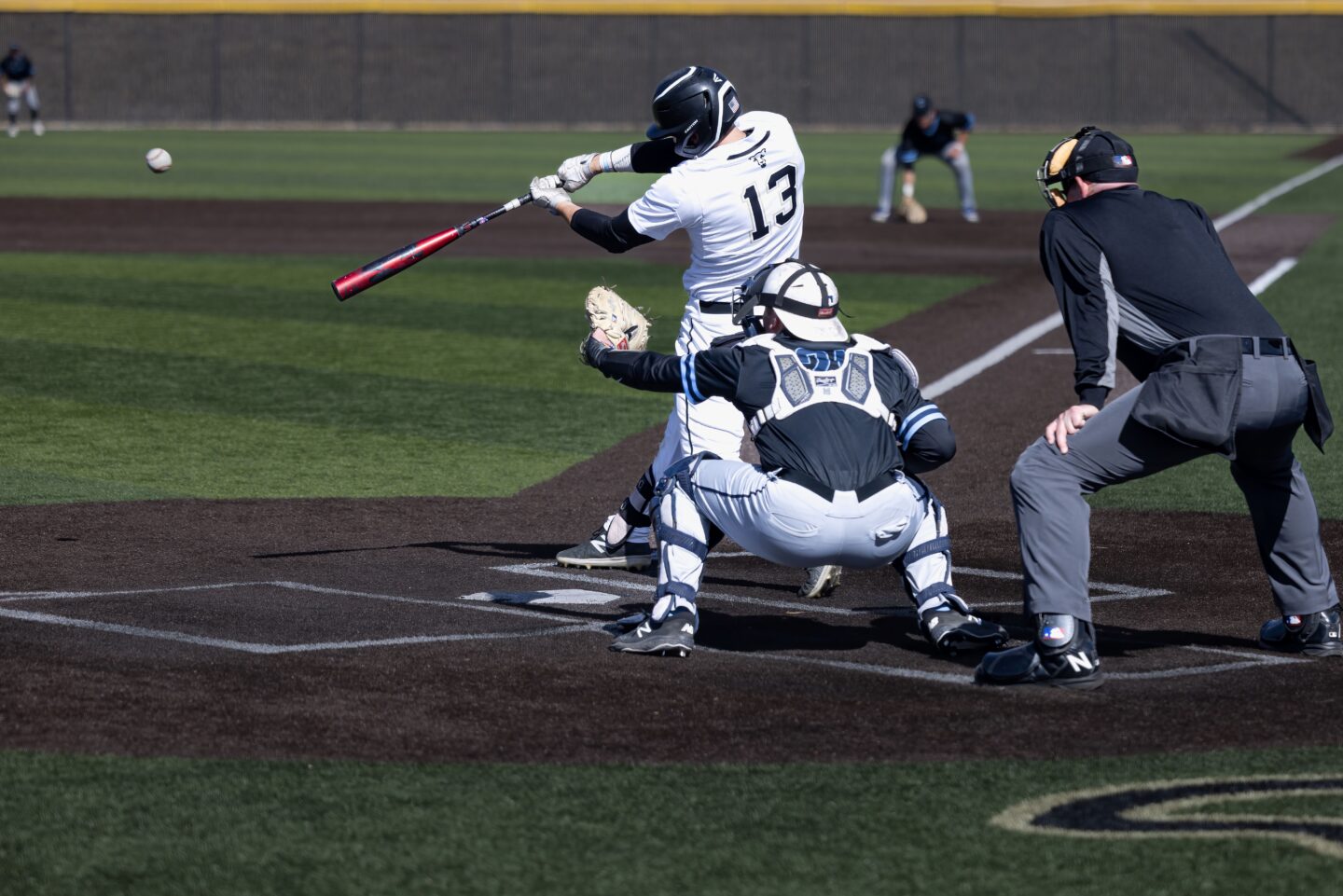
A 13-year-old walks off the cage after a bat speed test that topped out at 68 mph and asks the only two questions that matter: is that good for my age, and how do I add more? If you want to know how to improve bat speed in baseball, you start there, with a number and a plan, not another random drill list. This guide shows you what a good bat speed looks like for your level, where speed leaks out of your swing, the training that actually adds mph, and how to confirm those gains show up against live pitching instead of only off a tee.
The Short Answer
You raise bat speed by fixing three things in order: your sequencing and on-plane efficiency, your rotational strength, and your measurement. Guessing wastes reps. Measure first with a knob-mounted sensor, find the exact spot where speed leaks, then train it. Use these targets to self-assess right now: Pro 66–78 mph, HS Varsity 60–70 mph, Middle School 46–62 mph. Know your number, then go take reps that move it.
1. Know Your Number: Bat Speed Benchmarks by Level
Before you chase more speed, find out where you stand. Bat speed benchmarks give you a reference point:
- Pro: 66–78 mph
- High School Varsity: 60–70 mph
- Middle School: 46–62 mph
Here is the catch that confuses most hitters comparing numbers online. Where you measure changes the reading. Tip speed at the very end of the bat runs faster than speed measured at the sweet spot, and radar units read differently again. Blast Motion measures from a sensor mounted on the knob of the bat, so your number stays consistent every swing and you can compare today to last month honestly. If your reading sits below your level range, that is not a verdict, it is your starting line. Get one clean baseline, then build from it.
2. Where Bat Speed Actually Comes From
Speed is not one thing you turn up. It is generated and lost across the swing’s key measurement points: the Transition Event, when the bat moves from your Load into the Swing, the Swing phase itself as the barrel accelerates toward the ball, and Impact. Find the point where you leak it.
A. Sequencing and Rotational Acceleration
Rotational Acceleration (RA) is the “0–60 time” of your swing, how fast you get the barrel moving from the Transition Event onward. High RA is where game power lives, because it means you build speed quickly instead of drifting into it. If your peak bat speed looks fine but your hard contact does not, a slow, early or late commitment is usually the culprit. Cue: “Back pocket down the line” to load the pelvis and start the turn behind your front hip. Train the burst, then measure it.
B. On-Plane Efficiency and Connection
Speed only counts if it stays on the ball’s path. On-Plane Efficiency (OPE) measures how much of your swing tracks the pitch plane, and 70%+ is optimal against an MLB average of 68.6%. Pair it with Early Connection, which has a 90° target in an 80–105° range measured at the Transition Event. Poor connection dumps the barrel or casts it, so cue “Short to it, long through it” to keep the path tight early and extend through contact. Learn more about the numbers in Blast Motion’s guide to on-plane efficiency. Efficient speed beats raw speed that misses.
C. Strength and the Kinetic Chain
Your body is the engine. Bat speed is built from the ground up, from the legs into the hips, through the core, and out to the hands. If you land soft or spin out, you bleed power before it ever reaches the barrel. Cue “Land firm, turn behind your front hip” to keep a stable front side you can rotate against. A hitter who lands soft loses the wall to rotate against, and the barrel decelerates before impact. Build rotational strength off the field with the Dead Legs Drill to feel how much speed the upper half alone can produce, then add the legs back in. Weak links here cap every mph you try to add, so train the chain, not just the hands.
3. Tools and Methods to Add Bat Speed
Once you know where speed leaks, use these three methods to add it back. Pick the one that matches your gap.
- Overload/Underload (Contrast) Training. Alternate a bat about 20% heavier and one about 20% lighter than your gamer for controlled sets. The heavy bat recruits strength, the light bat trains turnover speed. The honest caveat many hitters miss: keep your swing pattern intact, because a heavy bat that changes your plane trades bad reps for a bigger number. Watch your attack angle and OPE so you build speed without wrecking mechanics.
- Rotational Strength and Med Ball Work. Add the Med Ball Scoop Toss and the Torque Drill to train the hips-to-hands sequence under load. This grows the Rotational Acceleration that shows up as game power, not just tee power.
- Sensor-Measured Feedback Loops. Take an Air Swing or a Stop at Contact Drill rep, read the metric, isolate the leak, and retest. Measuring every swing turns a guess into a loop: measure, fix, retest. This is the difference between hoping you got faster and proving it.
Click here to shop Blast Motion
4. Make Sure Speed Transfers From the Tee to Live Pitching
Here is the trap that stalls hitters: they add mph on the tee and lose it against a pitcher. Tee speed is comfortable and unhurried, while live pitching adds timing pressure that exposes a slow or late commitment. Check your transfer with Time to Contact, the measure of how long your swing takes to reach the ball, and watch whether your bat speed holds up in games, not just in the cage. If your number drops in live at-bats, the fix is timing, not more strength. Cue “Slow and early” to start your load sooner and let the barrel arrive on time. Speed you cannot repeat against a pitcher does not count.
5. How Blast Motion Helps
Everything above depends on one thing: seeing the real number. Blast Baseball turns any bat into a smart training tool with a Gen 3 sensor mounted on the knob and a mobile app that tracks bat speed, attack angle, on-plane efficiency, Early Connection, Rotational Acceleration, hand speed, time to contact, and ball flight. Blast iQ™ scores each swing and color-codes your focus areas green, yellow, and red, so you always know the one thing to work on next. Every reading is benchmarked against a database of 400M+ captured swings, giving you level-specific targets no drill list can. Auto-edited video with metric overlays and a 3D swing tracer let you see the leak, not just read it, and Air Swings let you train the fix anywhere, no ball required. Coaches get player and team reports plus remote coaching, so the whole lineup works off the same numbers. If you also want AI-video swing capture to pair with your sensor data, WIN Reality’s SwingAI is a complementary tool that adds a video layer to your training. Explore the full metric breakdown in the baseball swing metrics guide and see Blast Baseball for the full feature set.
Supporting Resources
- What is Attack Angle in Baseball?
- What is On-Plane Efficiency in Baseball?
- Baseball Swing Metrics Explained: The Complete Guide
- External research on the bat speed to exit velocity relationship from Driveline Baseball
Closing
Know your number, find the leak, train the right fix, and verify it transfers to live pitching. That loop, not another random drill, is how you add real bat speed and keep it. Measure your next swing and go build a faster one.