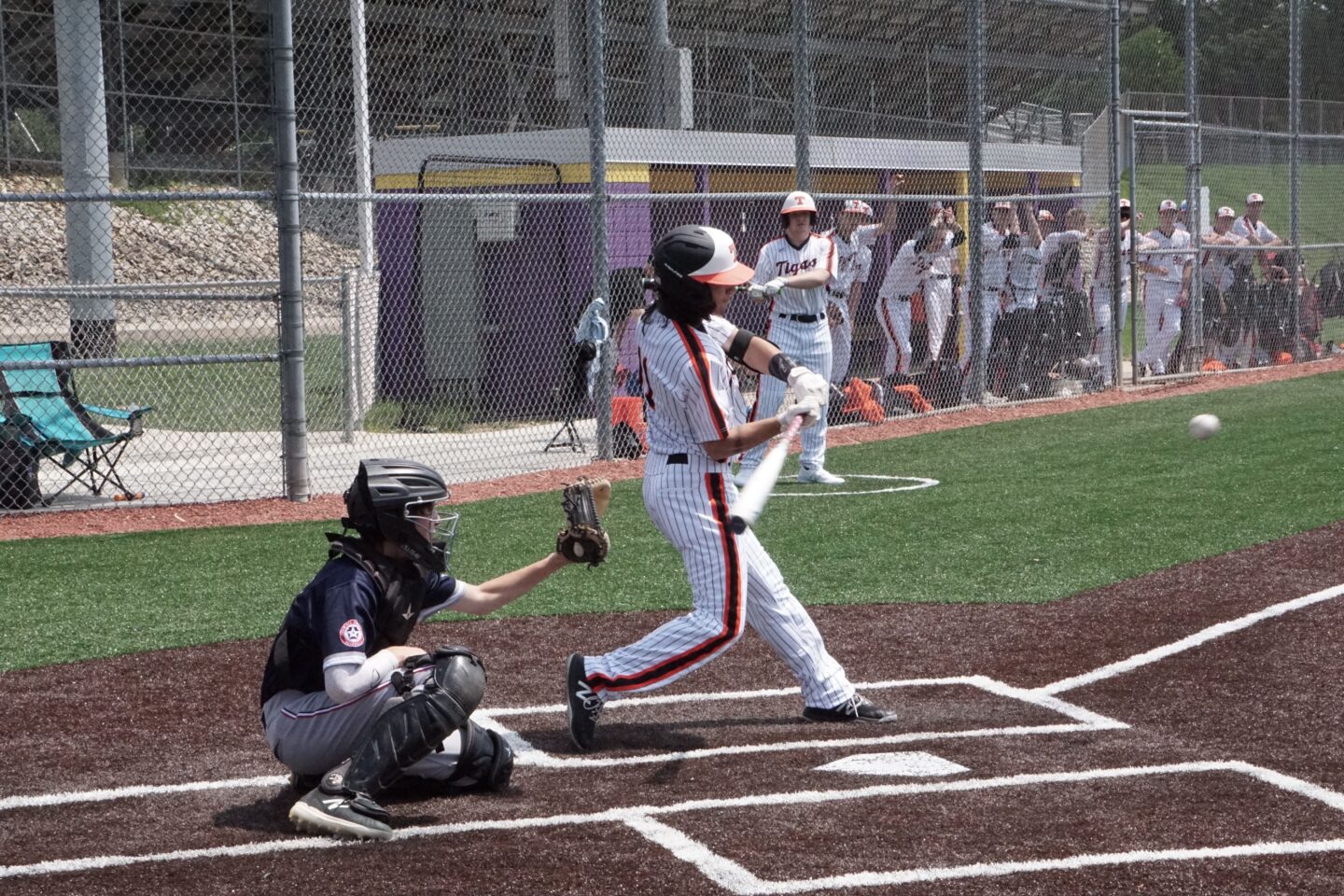
Picture this: you step into the cage, you’re squaring balls up, and the contact feels solid. But the exit velocity just isn’t there. The ball isn’t jumping. You’re hitting it well, just not hard enough. That gap between good contact and real damage comes down to one thing: bat speed.
Bat speed is the single most controllable power variable in your swing. If you’re not training it directly, you’re leaving runs on the field. This guide breaks down exactly how to increase bat speed, what numbers you should be chasing, and how to measure your progress so you’re not guessing.
Quick Answer
Bat speed is generated through efficient sequencing, hip-to-shoulder separation, and trained fast-twitch muscle engagement. Most hitters who plateau around 60 to 65 mph of bat speed are losing speed somewhere in their kinetic chain, not in their arms. Fix the chain, and the numbers move.
Why Bat Speed Is the Foundation of Hitting Power
Every coach talks about “staying through the ball” or “driving with your legs,” but none of that language tells you what’s actually happening in your swing. Bat speed tells you. It’s a direct measurement of how efficiently your body converts rotational energy into barrel movement at the point of contact.
The average high school hitter swings between 60 and 68 mph. Elite college hitters regularly sit above 70 mph. That difference isn’t just physical — it’s technical. A 5 mph gain in bat speed can translate to 15 to 20 feet of additional distance on a well-struck ball.
If you don’t know your current bat speed, you don’t have a baseline. And without a baseline, you’re training blind.
Click here to shop Blast Motion
Section A: Understanding What Drives Bat Speed
It Starts at the Ground and Works Up
Bat speed is not generated in your hands. It builds from the ground up through a sequence of body segments firing in the right order at the right time. Your lower half loads and rotates first. Your hips drive the torso. Your torso pulls the shoulders. Your shoulders drive the arms. Your hands deliver the barrel.
Break that sequence anywhere and you bleed speed. A hitter who fires their shoulders too early (before the hips have cleared) loses the hip-to-shoulder separation that creates rotational torque. The result is a weaker, slower swing even if the hitter feels like they’re “swinging hard.”
The Role of Hip-to-Shoulder Separation
Hip-to-shoulder separation is the angle between your hips and your shoulders at the moment your front foot lands. More separation means more potential rotational energy stored in your core. Elite hitters generate 40 to 50 degrees of separation. Many amateur hitters are at 20 to 25 degrees.
You don’t build separation by thinking about it in the box. You build it through deliberate movement training and repetition until the pattern is automatic.
Work on separation drills during your daily practice. Use a resistance band anchored at hip height and practice rotating your hips fully while keeping your shoulders closed. Do 3 sets of 10 reps before your cage work every session.
Section B: Common Bat Speed Killers and How to Fix Them
Casting the Hands
Casting happens when your hands move away from your body early in the swing, forcing the barrel to travel in a wide arc before it reaches the hitting zone. A cast swing adds inches to your path. More distance means more time. More time means less speed at contact.
The fix is a short, direct path to the ball. Think “lead elbow down and in” as you initiate your swing. The barrel should feel like it’s staying behind your hands as long as possible before releasing through the zone.
Measure your on-plane efficiency with a swing sensor. Numbers below 70 percent on-plane efficiency are a red flag for casting. Get that number above 80 percent and watch your bat speed climb with it.
A Weak or Early Weight Shift
If your weight transfers forward too early, your rotation stalls before it reaches peak speed. Your hips stop driving, your core disengages, and your arms take over. Arm-dominant swings cap out fast.
Stay loaded through your stride. Your weight shift should happen as part of rotation, not before it. Practice the “squish the bug” cue for your back foot, but pair it with a strong front leg brace at contact. That front wall is what allows you to transfer energy into the barrel instead of leaking it forward.
Section C: Building Bat Speed Through Targeted Training
Overspeed and Underload Training
One of the most evidence-backed methods for building bat speed is overspeed training with an underloaded bat. Swinging a bat that is 10 to 20 percent lighter than your game bat trains your nervous system to fire faster. Your muscles adapt to the demand for higher speed, and that speed carries over when you go back to your regular bat.
Pair underloaded swings with overloaded swings using a slightly heavier bat. The contrast method forces your body to feel both ends of the spectrum and accelerate more aggressively through the zone. A standard protocol: 3 sets of 5 swings with an underloaded bat, 3 sets of 5 with your game bat, 3 sets of 5 with an overloaded bat. Track your bat speed through each phase.
Rotational Medicine Ball Work
You cannot separate your bat speed training from your rotational power development. Rotational medicine ball throws, specifically the rotational side toss and the overhead slam, directly train the hip-to-shoulder sequencing that drives your swing.
Use a 4 to 6 lb medicine ball for these exercises. Focus on full hip rotation before your shoulders fire. Do 3 sets of 8 reps each side, 3 to 4 days per week. This is foundational strength work, not a replacement for cage time.
Loaded Intent Swings with Real-Time Feedback
The missing piece for most hitters is objective feedback on every rep. You can swing with maximum intent and still not know if your speed is going up, staying flat, or declining. Real-time data changes that.
When you attach a swing sensor to your bat and take intent-based swings — full effort, no hesitation, attacking the ball — you see immediately whether your adjustments are working. That feedback loop accelerates development faster than any amount of reps taken without data.
Click here to shop Blast Motion
Tools and Methods: Three Ways to Train Bat Speed with Precision
Method 1: Tee Work with Overspeed Protocols
Set up your tee at middle-in at belt height. This is the location where most hitters generate peak bat speed. Use your underloaded bat for 5 swings, then your game bat for 5 swings. Record your average bat speed across each set. Over 4 weeks, aim for a 2 to 3 mph improvement in your game bat average.
Method 2: Dry Swing Sequencing Drills
No ball, no tee. Just you, your bat, and a focus on the movement. Take slow-motion cuts where you consciously feel your hips fire first, then your torso, then your shoulders, then your hands. Speed it up rep by rep. End every set with 3 maximum-effort swings. This method builds the neuromuscular pattern without the distraction of the ball.
Method 3: Live Tracking During BP
Don’t just track swings in isolation. Attach your sensor during batting practice and track your bat speed under game-like conditions. Most hitters see a 3 to 5 mph drop between tee work and live pitching. Narrowing that gap is a performance breakthrough. Target a difference of no more than 2 mph between your peak tee speed and your average BP speed.
How Blast Motion Helps You Train Bat Speed the Right Way
Blast Baseball gives you real-time bat speed data on every swing through a compact sensor that attaches to the knob of any bat. You see bat speed, attack angle, time to impact, on-plane efficiency, and rotation metrics immediately after each rep through the Blast Vision app.
That data turns every cage session into a measurable training session. You’re not guessing whether your mechanics are improving. You’re watching the numbers confirm it or tell you something needs to change.
The athletes who improve fastest aren’t the ones who work the hardest. They’re the ones who work with the most accurate information. Blast Baseball gives you that information on every single swing, from warm-up to the last rep of the day.
Set your baseline. Build your plan. Track every rep. Your bat speed is a number, and numbers move when you train with intention and measure what matters.