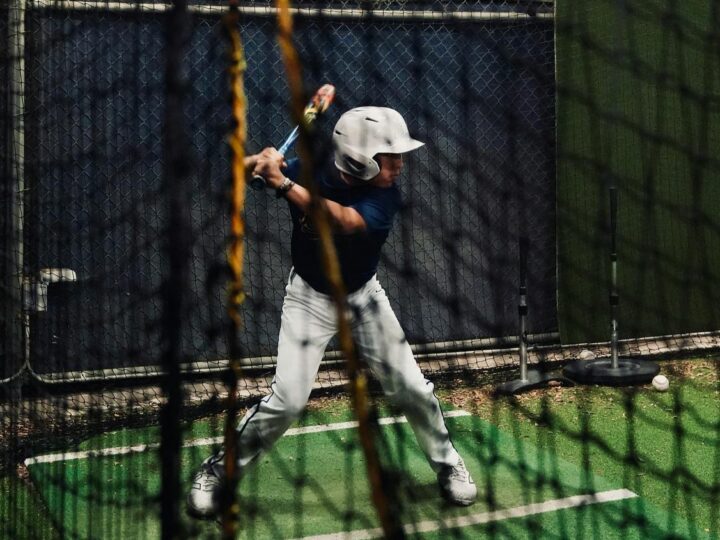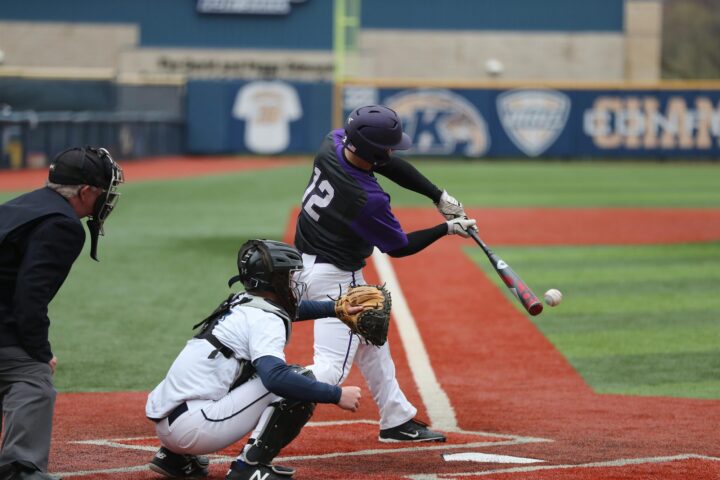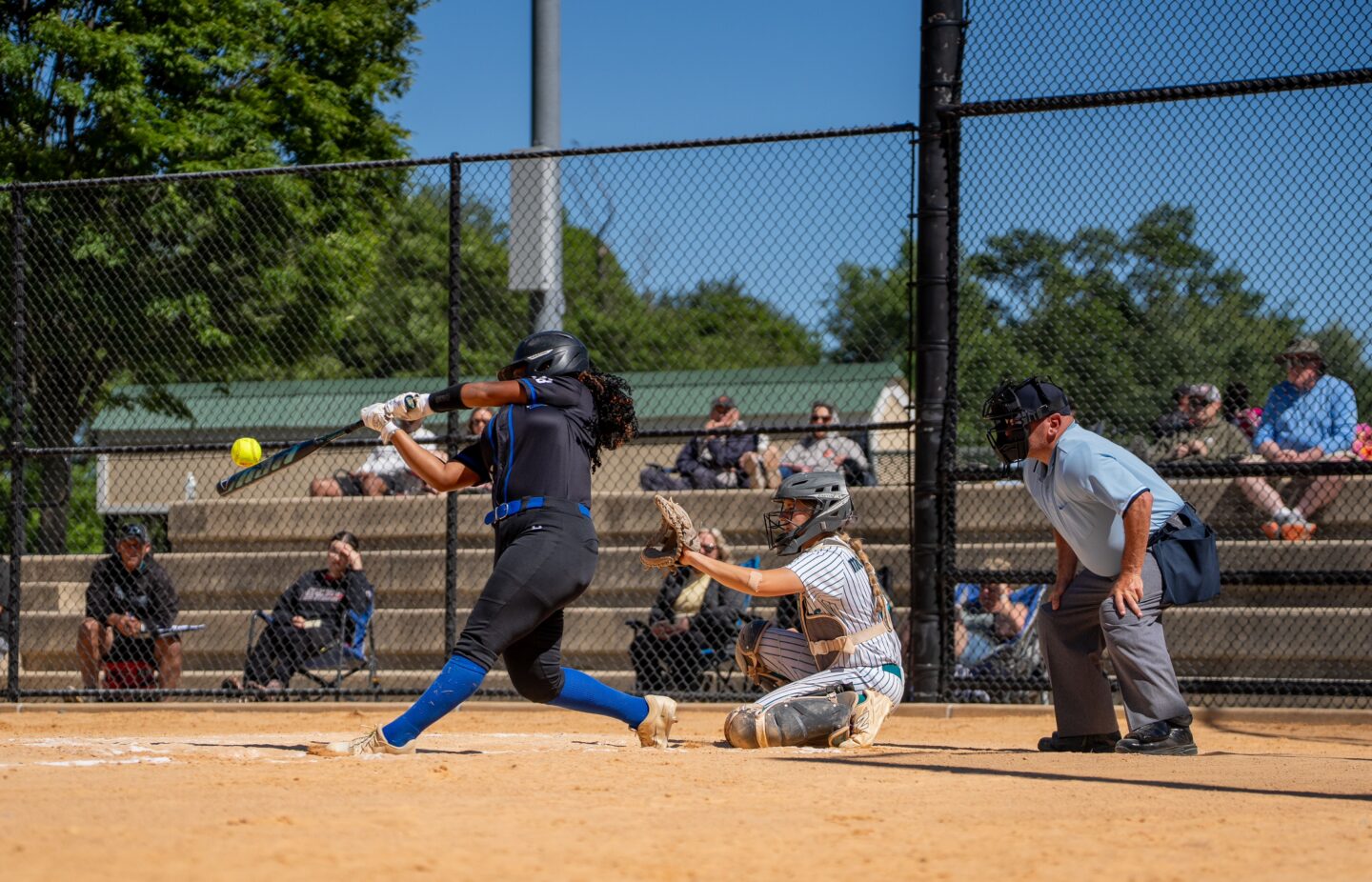
Your hitter crushes the ball off the tee. Then the game starts, she makes contact, and the ball dies on the ground to shortstop. Sound familiar? Almost every fastpitch coach has watched a swing that looks clean produce nothing. The problem is not effort. The problem is that softball swing mechanics get coached by feel instead of by measurement, so nobody knows which part of the swing is actually leaking power. This guide fixes that. You will get the real metrics that drive a swing, the benchmarks that tell you where you stand, and the exact drills that move each number in the right direction.
Quick Answer
Great softball swing mechanics come down to three measurable things: Bat Speed (how hard you move the barrel), on-plane bat path (whether the barrel matches the pitch), and Early Connection (whether your body stays coiled into contact). Measure those against your level’s benchmarks, find the weakest number, and drill it. That is the whole loop. Everything below shows you the targets and the drills that hit them.
1. The Mechanics That Actually Move the Ball
Most swing advice stops at “rotate your hips” and “finish high.” That is not enough to fix a stuck hitter. Break the swing into three measurable pieces and you can coach the exact flaw instead of guessing.
A. Bat Speed and Rotational Acceleration
Bat Speed is your power floor: the top-end speed of the barrel through the zone. Rotational Acceleration is your ceiling. Think of it as the 0 to 60 time of your swing, how fast you get the barrel up to speed. A hitter with high bat speed but low rotational acceleration looks strong in the cage and slow in the box, because game pitches do not wait.
What to do: build rotational acceleration by turning hard from the ground, not by muscling the barrel. Cue it with “back pocket down the line” to load the pelvis, then “land firm, turn behind your front hip.”
Why it helps: fast rotation is what turns a tee crusher into a hitter who can catch 60-plus mph velocity on time.
B. On-Plane Efficiency and Attack Angle
On-Plane Efficiency (OPE) measures how long your barrel stays in the hitting zone matched to the pitch path. Target 70% or higher. Your Attack Angle is the up or down direction of the barrel at contact. Because a fastpitch pitch arrives on a slight downward descent, a slightly positive attack angle (most fastpitch benchmarks fall in the 0° to 15° range depending on level) lets you match the ball and drive it in the air.
What to do: if your hitter swings under everything, her attack angle is too steep and her OPE is low. Cue “short to it, long through it” to stop casting and keep the barrel on plane.
Why it helps: a matched plane turns weak popups and topped grounders into line drives.
C. Early Connection and Connection at Impact
Early Connection is the angle between your torso and lead arm as rotation starts. Target 90 degrees, inside a healthy 80 to 105 degree range. Connection at Impact tells you whether you held that posture through the ball. Lose connection and you lose the power your rotation just built.
What to do: keep the barrel synced to your turn instead of pushing with the hands.
Why it helps: strong connection is what keeps a good-looking swing from “going nowhere,” because the energy from your lower half actually reaches the barrel.
2. Benchmarks by Level: Where You Stand
Here is what no opinion-based article gives you: real numbers. Blast Softball is built on a database of 400M+ captured swings, which means these benchmarks come from measured athletes, not guesswork.
Softball bat speed by level (measured natively on fastpitch hitters, not translated from baseball):
| Level | Bat Speed Range |
|---|---|
| Recreational | 32–46 mph |
| Travel 12U–14U | 38–52 mph |
| High School JV | 42–56 mph |
| High School Varsity | 49–63 mph |
| Travel 16U–18U | 54–66 mph |
| College | 58–70 mph |
| Professional | 63–75 mph |
Use these as checkpoints, not verdicts. If your daughter is a varsity hitter sitting at 45 mph, you now know exactly where the gap is and can track it week to week instead of wondering. A hitter who climbs from 45 to 55 mph over a season has proof her training is working, and proof is what keeps an athlete motivated through the grind.
College coaches recruit on measurable output. Knowing your Bat Speed and pairing it with your On-Plane Efficiency turns “she has a nice swing” into numbers a recruiter can trust and compare. When you can walk into a showcase already knowing your data sits in the varsity range, you are recruiting yourself. Measure first, then build a plan around the weakest number.
3. Common Swing Flaws and the Metric Behind Them
Every flaw shows up in the data. This is where solid softball swing mechanics separate from swings that only look good in warmups. Match the symptom to the metric and you stop guessing.
- “She makes contact but the ball goes nowhere.” Usually poor Connection at Impact. The lower half fires, but the barrel disconnects, so speed never reaches the ball.
- “She swings under everything.” A steep Attack Angle and low On-Plane Efficiency. The barrel enters and exits the zone too fast on the wrong plane.
- “Her swing looks long and slow.” Casting, seen as low Rotational Acceleration. The barrel drifts away from the body early and never accelerates.
- “She is always late on velocity.” Late commitment and slow Time to Contact. The swing starts too late to catch the pitch out front.
Takeaway: name the metric before you prescribe the fix. The drills below map straight to these numbers.
4. Tools and Methods to Fix Your Swing
Use these three drills, each tied to a metric you just measured.
- Stop at Contact Drill. Freeze the swing at the point of contact and check your posture. This trains Connection at Impact so the barrel stays synced to your turn and stops leaking power on grounders.
- Shoulder Slot Drill. Grooves the barrel onto the pitch plane to raise On-Plane Efficiency and flatten a steep Attack Angle. This is your fix for the hitter who swings under the ball.
- Torque Drill. Builds Rotational Acceleration by teaching you to turn hard and fast from the ground up. This is how a strong-but-slow swing gets quick enough for game speed.
Run each drill, then re-measure the matching metric so you can see the change instead of hoping for it.
Click here to shop Blast Motion
5. How Blast Motion Helps
You cannot fix what you cannot measure. Blast Softball turns any bat into a smart training tool with a Gen 3 knob-mounted sensor and mobile app that captures Bat Speed, Hand Speed, Power, attack angle, connection, rotation, and time to contact on every swing. Blast iQ™ scores each swing and surfaces color-coded green, yellow, and red focus areas, so your athlete knows the one number to work on next. Auto-edited video with metric overlays and a 3D swing tracer let you see the flaw, not just read it. As the official partner of USA Softball and the USA Softball Women’s National Team, Blast Softball is built specifically for the fastpitch swing, benchmarked on fastpitch hitters, not borrowed from baseball.
Supporting Resources
- Blast Softball product page for sensor and app details
- USA Softball for official rules and development resources
- Blast Baseball if you also train baseball hitters
Closing
Stop coaching the softball swing by feel. Measure Bat Speed, on-plane bat path, and Early Connection, compare them to your level’s benchmarks, and drill the weakest number until it moves. That is how a tee crusher becomes a game hitter.