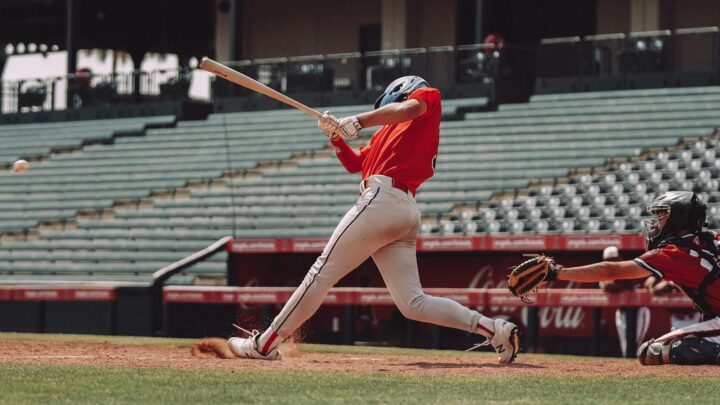
You finish a round of swings, open the app, and see attack angle: 4°. Your teammate shows 12°. Now you want to know which number is right for your age.
Here is the short version of the ideal attack angle in baseball by age. Blast targets 6° to 14° for most hitters, and that range barely changes from youth to college. What changes with age is your bat speed and consistency. For MLB context, Statcast calls any swing between 5° and 20° ideal.
This guide covers what comes next: how to read your number for your age, pair it with bat speed, and train it.
1. Start With the Range, Not One Number
A high school coach sees his cleanup hitter at 7° and his leadoff hitter at 13°. Both hit the ball hard. Neither one needs to match the other.
That is why you should judge attack angle against a range. A single “perfect” number does not fit every swing.
Start with Blast’s target. Blast’s attack angle guide puts most hitters at 6° to 14°.
Then add MLB context:
- Statcast puts the MLB average attack angle at about 10°. Blast’s definition post cites 8°.
- Seasonal averages for MLB hitters range from roughly 0° to 20°.
- Statcast defines an ideal attack angle for a single swing as 5° to 20°.
The range matters because results follow it. MLB.com’s May 2025 article reports that, since the 2023 All-Star break, ideal-angle swings hit .272 with a .487 slugging percentage. Other swings hit .250 with a .354 slugging percentage.
Blast’s definition post also publishes ranges by level. Use that table as your reference point. Then use the sections below to interpret where you land.
Takeaway: Find your level’s range first. Aim to live inside it on most swings.
2. Ideal Attack Angle by Age: Youth Through Pro
A parent of a 10-year-old sees a 2° reading and worries the swing is broken. A college hitter sees 9° and wonders if he should add loft.
Both readings fall inside Blast’s 0° to 14° table range for youth through college. Most hitters work toward the 6° to 14° target, so the 10-year-old has room to grow toward it.
Blast’s table gives youth through college the same 0° to 14° range. Pro sits at 2° to 16°. The ideal attack angle by age barely moves. What changes is your bat speed and how consistently you repeat your path.
Use this guide for each age group:
- Youth (8-12): Expect a positive but modest attack angle. Focus on repeating the same path swing after swing. A slightly positive number with steady contact beats a big number you can’t repeat.
- Middle School (13-14): Typical bat speed runs 46-62 mph. Keep your attack angle positive and modest. Track whether your numbers tighten as your bat speed climbs.
- Advanced (15-College): High school varsity bat speed runs 60-70 mph. Your range stays the same as your bat gets faster. Consistency across sessions matters more than any single high reading.
- Pro: Bat speed runs 66-78 mph. Blast’s pro range sits around 2° to 16°, and MLB hitters average about 10°.
Get full bat speed context in Blast’s baseball bat speed guide.
Takeaway: Compare yourself to your own age group. A 12-year-old with a steady, slightly positive attack angle is on track.
3. Why Bat Speed Changes the Target
A 13-year-old watches MLB highlights and tries to swing at 15°. His bat speed sits near the low end of the middle school range. His path turns into an uppercut.
Attack angle and bat speed work together, but they do different jobs. Blast’s target range stays nearly the same from youth to pro. Bat speed changes what a given angle produces: how hard you hit the ball. Pro hitters swing 66-78 mph, far above middle school speeds.
What to do:
- Check bat speed first. Find where you fall in your age group’s bat speed range.
- Stay inside your range. Use the Blast range for your level as your guide.
- Tighten consistency as you grow. Keep the same range and narrow your spread as your bat speed climbs.
Why it matters: a steeper swing won’t make up for lower bat speed. Build speed and a consistent path together.
Takeaway: Read attack angle and bat speed side by side. One number without the other tells half the story.
Click here to shop Blast Motion
4. Read Trends, Not Single Swings
You take 10 swings off the tee. One reads 18°, the next reads 3°. Before you change anything, ask what the full session says.
One swing is a snapshot. A trend shows you what your swing does.
How to read your data:
- Use a real sample. Judge your attack angle across a full session of swings.
- Compare like with like. Tee swings and live swings can look different. Compare tee to tee and live pitching to live pitching.
- Follow the color coding. Blast iQ scores each swing and flags focus areas in green, yellow, and red. Watch which color shows up most.
- Look for timing. Statcast notes that ideal attack angle rate largely reflects timing. Wide swings in your number off live pitching often point to timing.
If you’re late, use the cue “Slow and early.” Start your move sooner so you can stay smooth into contact.
For help reading each screen, see how to read Blast Motion app data.
Takeaway: Judge your attack angle by the session average and the spread. A tight spread inside your range is the goal.
5. Fix a Steep or Flat Attack Angle
A coach sees a hitter’s attack angle jump around while on-plane efficiency sits under 70%. On video, the barrel leaks away from the body early. The number is a symptom. The swing flaw is the cause.
Start by checking the related metrics:
- On-plane efficiency: 70% or higher is optimal. Low readings mean the bat leaves the swing plane too early.
- Early Connection: The target is 90°, with an 80-105° range. Blast measures it at the Transition Event.
- Vertical Bat Angle: This shows how tilted the bat is at impact. Learn more in Blast’s vertical bat angle guide.
Then match the flaw to the work:
- Casting or barrel leaking away: Use the cue “Short to it, long through it.” Pair it with the Stop at Contact Drill.
- Weak or inconsistent forward move, or Sway: Use the cue “Land firm, turn behind your front hip.” Pair it with the Walk Through Drill.
These drills target the flaw behind the number. Clean up the flaw, then retest your attack angle and on-plane efficiency.
Keep cues in practice. Thinking about mechanics mid-swing breaks the swing down, so compete with a clear mind in games.
Takeaway: Diagnose with related metrics, fix the flaw, then let your attack angle settle into your range.
6. Build Your Attack Angle Plan in the App
You know your range and your flaw. Now you need a plan you can repeat every week.
Blast Baseball pairs a Gen 3 sensor on the knob of your bat with the Blast app. It tracks bat speed, attack angle, plane, connection, rotation, time to contact, power, and ball flight. The sensor measures from the Transition Event through Impact.
Build your plan:
- Use Air Swings. Capture swings without a ball when you can’t get to a cage.
- Use Coach Mode. Capture and review swings for the hitters you coach.
- Review the video. Auto-edited clips show metric overlays and a 3D swing tracer.
- Pull reports. Player and team reports show trends over time. Remote coaching lets your coach review from anywhere.
- Check in weekly. Compare your session average and spread to last week’s.
Blast is trusted by more than 300 college and pro teams and 83% of pro organizations. It has captured more than 400 million swings.
For a full metric glossary, read baseball swing metrics explained.
Takeaway: Set a weekly check. Track attack angle, bat speed, and on-plane efficiency together.
Supporting Resources
- What is attack angle in baseball? Definition and Blast’s ranges by level.
- What is bat speed in baseball? Bat speed benchmarks by level.
- MLB Statcast attack angle glossary The MLB definition and averages.
Closing
Your ideal attack angle depends on your level, your bat speed, and how consistently you repeat your path. Find your range, track your trends, and fix the flaw behind the number.