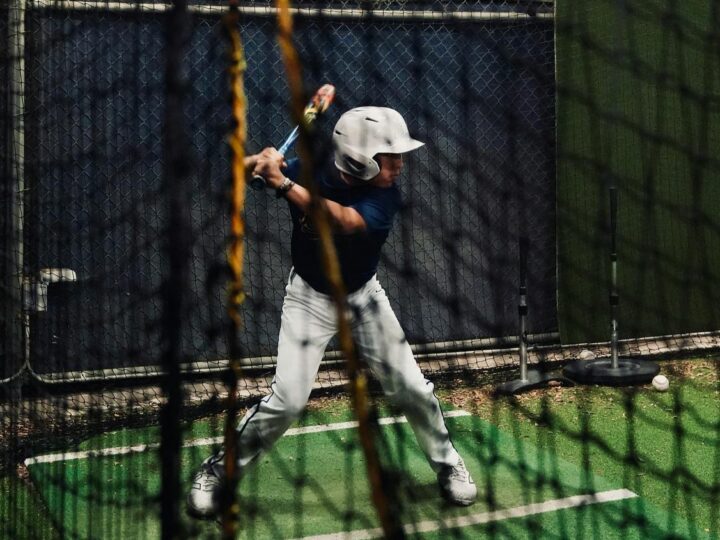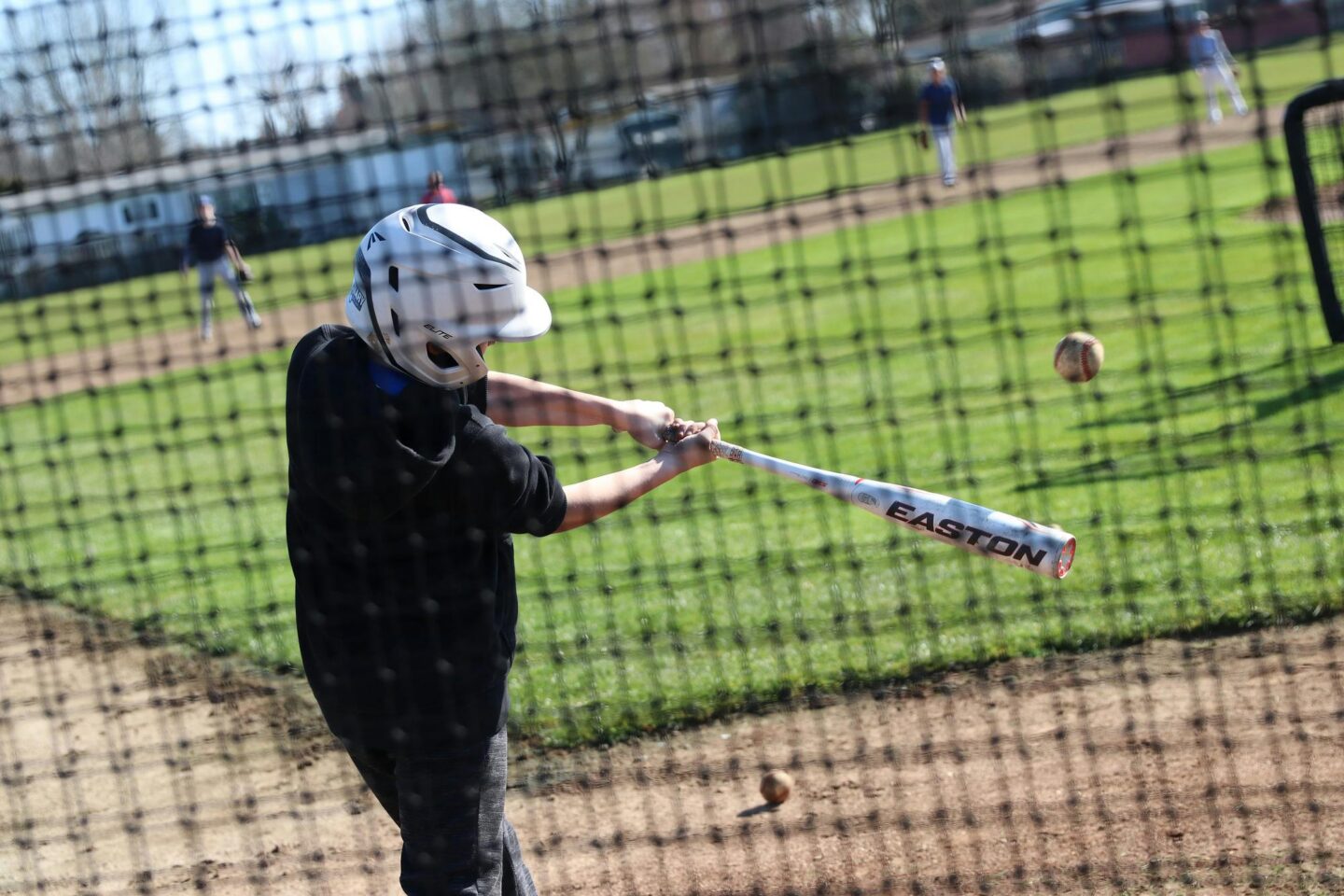
Your 11-year-old makes clean contact in the cage on Thursday, then pops everything up on Saturday. You want to know why, and you know that “swing harder” is not an answer. Maybe it’s time to look into a swing analyzer.
The best swing analyzer for youth baseball and softball is Blast Motion. Blast Baseball and Blast Softball run the same Gen 3 bat-mounted sensor and app on iOS and Android, so you get instant feedback on the actual swing instead of a bleacher guess. This guide covers what matters for ages 8-14 and how to choose.
Is a Swing Sensor Worth It for a Youth Hitter?
Picture the parent behind the backstop trying to diagnose a slump by eye. You cannot see 55 mph of bat speed or a 20-degree attack angle from the bleachers. A swing sensor puts those numbers in your hand. Blast turns any bat into a training tool and scores each swing green, yellow, or red in Blast iQ, so your athlete knows the one thing to fix next.
Is the measurement trustworthy at this age? The technology is sound. In a peer-reviewed study of inertial sensors, body-worn sensors captured a hitter’s trunk and hand motion with accuracy matching laboratory motion capture. Blast’s own benchmarks come from 400M+ captured swings, and the platform is trusted by 300+ college and pro teams and 83% of pro organizations.
For an 8-14 player, that means less guessing and faster fixes. You stop saying “swing level” and start showing whether the barrel stayed on plane. Set a baseline this week, then track it every session.
What to Look For in a Youth Swing Analyzer
You are in the sporting-goods aisle with two tabs open and a travel-ball invoice already paid. Here is what actually matters for a youth hitter, in priority order.
- Phone compatibility. Pick a sensor that runs on both iOS and Android. Blast does. Some competitors are iOS-only, which strands Android families on day one.
- Bat-mounted measurement. A sensor on the bat knob reads the real swing, not a video estimate. That is how you get true attack angle and connection numbers.
- Age-appropriate benchmarks. Youth targets differ by sport. A 12U softball hitter should never be graded against a middle-school baseball player.
- Drills tied to metrics. A good analyzer connects each red number to a specific fix, not a wall of charts.
- Video you can review together. Auto-edited video with metric overlays lets you and your athlete see cause and effect on the same clip.
Both Blast Baseball and Blast Softball run that same Gen 3 sensor and app. They track bat speed, attack angle, on-plane efficiency, connection, rotation, and time to contact, then add auto-edited video, a 3D swing tracer, Air Swings, and Coach Mode for remote feedback. If a device misses any of the five priorities above, keep it in the case.
Blast vs Diamond Kinetics vs Zepp: The Honest Comparison
You searched “2026 best bat sensor” and a roundup still lists Zepp. Skip that list. Zepp discontinued its baseball and softball sensor and now supports golf only, so any current baseball or softball recommendation for it is outdated. Here is the honest field for a youth buyer.
| What matters | Blast | Diamond Kinetics SwingTracker | Zepp |
|---|---|---|---|
| Sports | Baseball and softball (separate apps) | Baseball and softball | Discontinued for baseball and softball |
| Phone support | iOS and Android | iOS only | No current support |
| Youth benchmarks | Youth to pro, from 400M+ swings | 8U to pro, gamified | None current |
| Status | Active, official USA Softball partner | Active | Golf only |
On accuracy, Blast commissioned an industry comparison in 2016 through the Center for Human Performance, led by Arnel Aguinaldo. In that bat-speed accuracy comparison, Blast measured a standard deviation of 3 mph against Diamond Kinetics at 5 mph and Zepp at 7 mph, with Blast setup around 90 seconds versus 5 to 10 minutes for Diamond Kinetics. Treat the numbers as directional for an 8-14 buyer, and weight phone support and youth benchmarks first.
Click here to shop Blast Motion
Which Metrics Should a Youth Player Actually Track?
Your athlete’s first Blast session throws a dozen numbers on the screen. For an 8-14 hitter, lead with three.
- Early Connection (target 90 degrees, range 80-105). This shows whether the barrel sits in a powerful position as the swing starts. It is a distinct metric from hip-shoulder separation, so read them separately.
- Attack Angle (7-15 degrees). This matches the bat path to the downward plane of the pitch and produces line drives instead of grounders and pop-ups.
- Time to Contact. This is how quickly the barrel reaches the ball. A lower number means a quicker swing and it exposes late timing fast.
Bat speed and rotational acceleration matter, but they earn more weight at the high-school level. For youth, hold them to age-and-sport benchmarks: a middle-school baseball player lands around 46-62 mph, while a 12U-14U travel softball player lands around 38-52 mph. Never grade one against the other. On-plane efficiency of 70% or higher is the target for both. The 68-69% MLB average is baseball-specific, so do not apply it to a softball hitter.
Want the full picture on every number? Start with our baseball swing metrics explained guide, then set one target per session.
Turn One Number Into a Drill
A red Early Connection score tells you exactly what to work on next. The point of the sensor is to turn one number into one assignment. Match the flaw to the drill, coach the cue, then recheck the metric.
- Barrel casting or leaking away from the body? Run the Stop at Contact Drill and cue it “Short to it, long through it,” then recheck on-plane efficiency.
- Low bat speed from too little hip-shoulder separation? Pair the Torque Drill with the Knob to Knee Drill to build the stretch between the hips and shoulders.
- Weak or inconsistent forward move, or a Sway? Use the Walk Through Drill and cue it “Land firm, turn behind your front hip.”
- Late timing showing up as early, rolled-over contact? Coach the cue “Slow and early” and watch time to contact settle.
Want reps against live-speed pitching between cage sessions? WIN Reality’s SwingAI adds AI-video swing analysis for baseball and softball hitters and works alongside your Blast data. Run one drill, confirm the number moved, then pick the next red score.
Supporting Resources
- Compare the sensor, app, and full feature set on the Blast Baseball product page.
- Check softball-specific benchmarks and the USA Softball partnership on the Blast Softball page.
- Learn what every number means in our baseball swing metrics explained guide.
The Bottom Line for Youth Parents
For an 8-14 baseball or softball player, the best swing analyzer for youth baseball and softball is Blast: dual-platform, bat-mounted, and benchmarked by age and sport. Set a baseline, fix one red number at a time, and let the data prove progress.