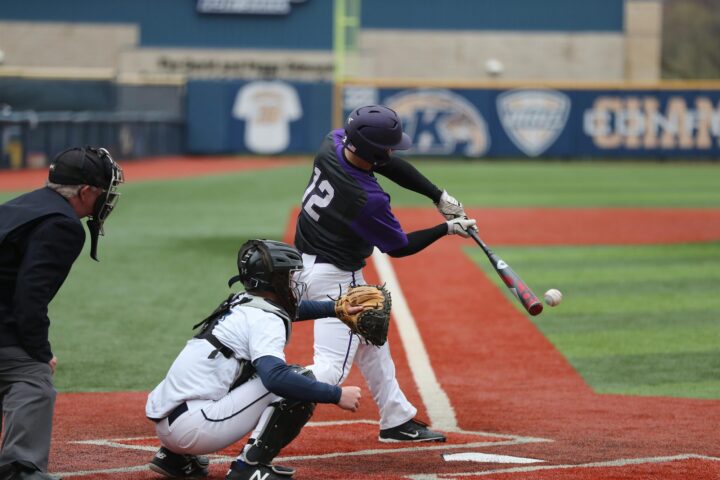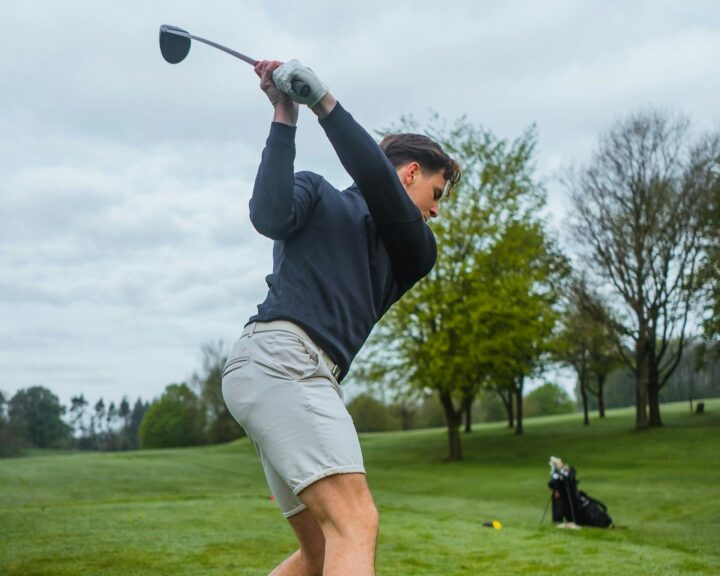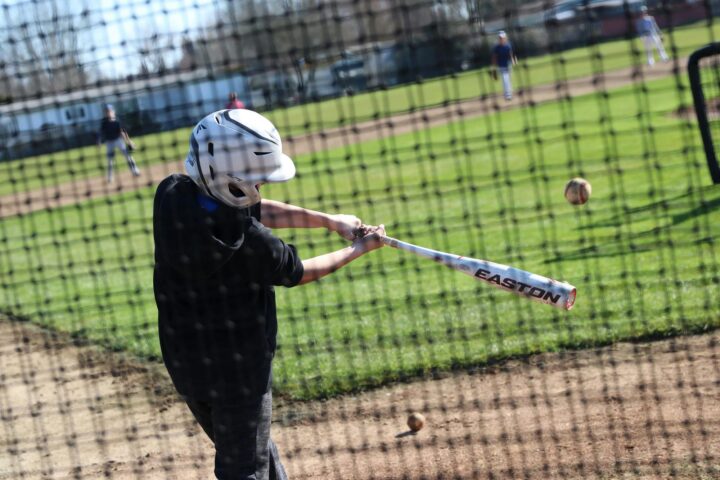
Your player finishes their first session with the sensor, and the app shows a dozen numbers. They asks if 48 mph is good. So, what does Blast Motion measure? The sensor on the bat knob (or golf club grip) captures motion, and the app turns it into swing metrics.
When you make contact, the Blast iQ camera estimates ball flight. This glossary defines every metric in Blast Baseball, Blast Softball, and Blast Golf, with the target range for each one.
How Blast Captures Data: What Does Blast Motion Measure Directly?
Most confusion starts with where the numbers come from. Blast breaks the swing into Stance, Load, Transition Event, Swing, and Impact. The knob sensor measures from the Transition Event onward, so your stance and load happen before it starts recording.
The app calculates metrics like Power from sensor data plus your bat profile. Enter your exact bat length and weight, or those readings will drift. Ball flight comes from a separate source, the Blast iQ camera, and every benchmark draws on a database of 400M+ captured swings.
Is Blast Motion Accurate?
A 2022 peer-reviewed study in Sports compared knob-mounted bat sensors, including Blast, against optical motion capture. Speed readings matched motion capture with high accuracy, while swing angle readings agreed less closely. In a separate Blast-commissioned comparison by the Center for Human Performance, Blast posted a 3 mph standard deviation versus 5 mph and 7 mph for two competitors. Treat that one as an industry test, not independent research.
Takeaway: Trust speed numbers for comparing sessions. Read angle metrics as trends across many swings.
Speed Metrics: Bat Speed, Peak Hand Speed, and Power
Speed is the first number every hitter checks. These metrics show how fast the barrel moves and how much energy it carries into the ball.
What Is Bat Speed?
Bat Speed is the speed of the barrel’s sweet spot at impact, measured in mph. Blast places the sweet spot 6 inches from the end of the bat.
- Blast Baseball ranges run 46–62 mph for Middle School, 60–70 mph for HS Varsity, and 66–78 mph for Pro.
- Blast Softball ranges run 38–52 mph for Youth, 46–56 mph for Travel 12U–14U, 51–61 mph for High School, and 57–66 mph for College.
See the full Blast Softball benchmarks for every level.
What Is Peak Hand Speed?
Peak Hand Speed is the fastest your hands move during the swing, measured in mph.
- Blast Baseball ranges run 15–21 mph for Youth and 23–29 mph for Pro.
- Blast Softball ranges run 13–17 mph for Youth and 17–21 mph for Pro.
What Is Power?
Power is a composite of bat mass, acceleration, and speed, measured in kilowatts (kW). It shows how much energy your swing delivers.
- Blast Baseball ranges run 0.90–2.50 kW for Youth and 3.65–5.65 kW for Pro, per the Blast Baseball benchmarks.
- Blast Softball ranges run 0.80–2.20 kW for Youth and 2.10–2.90 kW for Pro.
Drill: If low Bat Speed comes from limited hip-shoulder separation, run the Torque Drill and the Knob to Knee Drill. Then retest Bat Speed.
Path and Plane Metrics: Attack Angle, Vertical Bat Angle, and On-Plane Efficiency
Fast swings still miss when the barrel travels on the wrong path. These metrics show where the barrel goes and how long it stays on plane.
What Is Attack Angle?
Attack Angle is the angle of the bat’s path at impact relative to horizontal. Positive means uphill, negative means downhill, and 0° is level.
- Blast Baseball ranges run 0° to 15° for Youth and 5° to 15° for Pro.
- Blast Softball ranges run ?2° to 15° for Youth and 3° to 15° for Pro.
Go deeper with what attack angle means in baseball.
What Is Vertical Bat Angle?
Vertical Bat Angle (VBA) is the angle of the bat relative to horizontal at impact. A barrel below your hands reads negative.
Target: ?10° to ?40°, depending on pitch location. VBA also sets the plane that On-Plane Efficiency uses.
What Is On-Plane Efficiency?
On-Plane Efficiency (OPE) is the percentage of your swing the bat spends on the swing plane set by VBA at contact.
- Blast Baseball hitters should aim for 70%+, and the MLB average is 68.6%.
- Blast Softball hitters should aim for 70%+.
Learn more about On-Plane Efficiency in baseball.
Drill: If low OPE comes from casting, use the Stop at Contact Drill with the cue “Short to it, long through it.”
Body and Timing Metrics: Early Connection, Connection at Impact, Rotational Acceleration, and Time to Contact
Your bat path depends on how your body moves the bat. These metrics measure that body-bat relationship and how quickly your swing gets on time.
What Is Early Connection?
Early Connection is the angle between your body tilt and VBA as the swing starts at the Transition Event.
Target: 90°, with a range of 80°–105°. Read the Early Connection guide for more.
What Is Connection at Impact?
Connection at Impact is the same body-bat angle, measured at contact.
Target: 90°, with a range of 80°–95°.
Connection is a separate metric from hip-shoulder separation (the X-Factor, trained by the Torque Drill).
What Is Rotational Acceleration?
Rotational Acceleration (RA) is how quickly the bat accelerates into the swing, measured in g’s. Think of RA as the “0-60 time” of your swing.
Target: higher RA, because high RA means game power. See how Rotational Acceleration works.
What Is Time to Contact?
Time to Contact is the time from the start of the downswing to impact, measured in seconds.
- Blast Baseball ranges run 0.17–0.23 s for Youth and 0.13–0.17 s for Pro, with an MLB average of 0.149 s.
- Blast Softball ranges run 0.16–0.22 s for Youth and 0.15–0.18 s for Pro.
Next step: If you’re late, use the cue “Slow and early.” If your forward move is weak or you sway, run the Walk Through Drill and cue “Land firm, turn behind your front hip.”
Click here to shop Blast Motion
Scores and Ball Flight: Blast iQ, Exit Velocity, Launch Angle, and Distance
Raw numbers tell you what happened. Scores and ball flight tell you where you rank and what the ball did.
What Is Blast iQ?
Blast iQ scores each swing against players at your level. It flags focus areas in green, yellow, or red.
Scale: 50 is average, 60+ is above average, and 70+ is elite.
What Is Ball Flight?
Ball Flight covers Exit Velocity, Launch Angle, and Distance, estimated by the Blast iQ camera after impact. You need ball contact and the camera set up.
The sensor alone doesn’t measure Exit Velocity. Blast Softball lists all three ball-flight numbers as key metrics.
Takeaway: Start with the focus area Blast iQ flags, then check whether Exit Velocity climbs.
Blast Golf Full-Swing Metrics: What Does Blast Motion Measure in Golf?
You flush a 7-iron, then chunk the next one with the same feel. Blast Golf puts numbers on that gap. Goal ranges are benchmarked by handicap and club type, with traffic-light indicators.
What Is Swing Speed in Golf?
Swing Speed is the speed of the clubhead’s sweet spot at impact, measured in mph.
What Are Backswing Time and Downswing Time?
Backswing Time runs from address to the top, and Downswing Time runs from the top to impact, both in seconds.
Tour range: Backswing 0.65–0.85 s, Downswing 0.23–0.32 s.
What Is Swing Tempo?
Swing Tempo is the ratio of Backswing Time to Downswing Time.
Tour range: 2.5:1 to 3.1:1.
What Is Peak Hand Speed in Golf?
Peak Hand Speed is the maximum speed of your hands on the grip, measured in mph.
What Is Attack Angle in Golf?
Attack Angle is the clubhead’s up or down movement into the ball at impact, measured in degrees. Blast Golf also tracks face rotation.
Next step: Compare your tempo by club with the best tempo for every club.
Blast Golf Putting Metrics
Your putt dies short on a 12-footer. Blast Golf splits every stroke into speed control and direction.
What Are Backstroke Time and Forward Stroke Time?
Backstroke Time is the time from address to the top of the stroke. Forward Stroke Time is the time from the top to impact, both in seconds.
What Is Putting Tempo?
Putting Tempo is the ratio of Backstroke Time to Forward Stroke Time.
Tour range: 1.8:1–2.2:1.
What Is Backstroke Length?
Backstroke Length is how far the putter travels from address to the top, measured in inches.
What Is Impact Stroke Speed?
Impact Stroke Speed is the speed of the putter’s sweet spot at impact, measured in mph.
What Is Face Angle at Impact?
Face Angle at Impact is where the putter face points at contact, in degrees. It equals the difference between Backstroke Rotation and Forward Stroke Rotation.
Tour range: ±0.3°.
What Are Loft Change and Lie Change?
Loft Change and Lie Change track how the putter’s loft and lie shift during the stroke, measured in degrees.
What Are Backstroke Rotation and Forward Stroke Rotation?
Backstroke Rotation and Forward Stroke Rotation measure how much the putter face rotates on each side of the stroke, in degrees.
Takeaway: Fix Face Angle at Impact first, then dial in tempo for distance control.
Supporting Resources
Now you know what every number means. Pick one metric below your target range, run the matched drill or cue, and retest it next session. Track that one number until it lands in range.